
Record of processing activities (ROPA) and data deletion concept
The ROPA and a data deletion concept are central building blocks of GDPR compliance: the ROPA documents processing activities; the deletion concept ensures storage limitation and compliant data erasure.
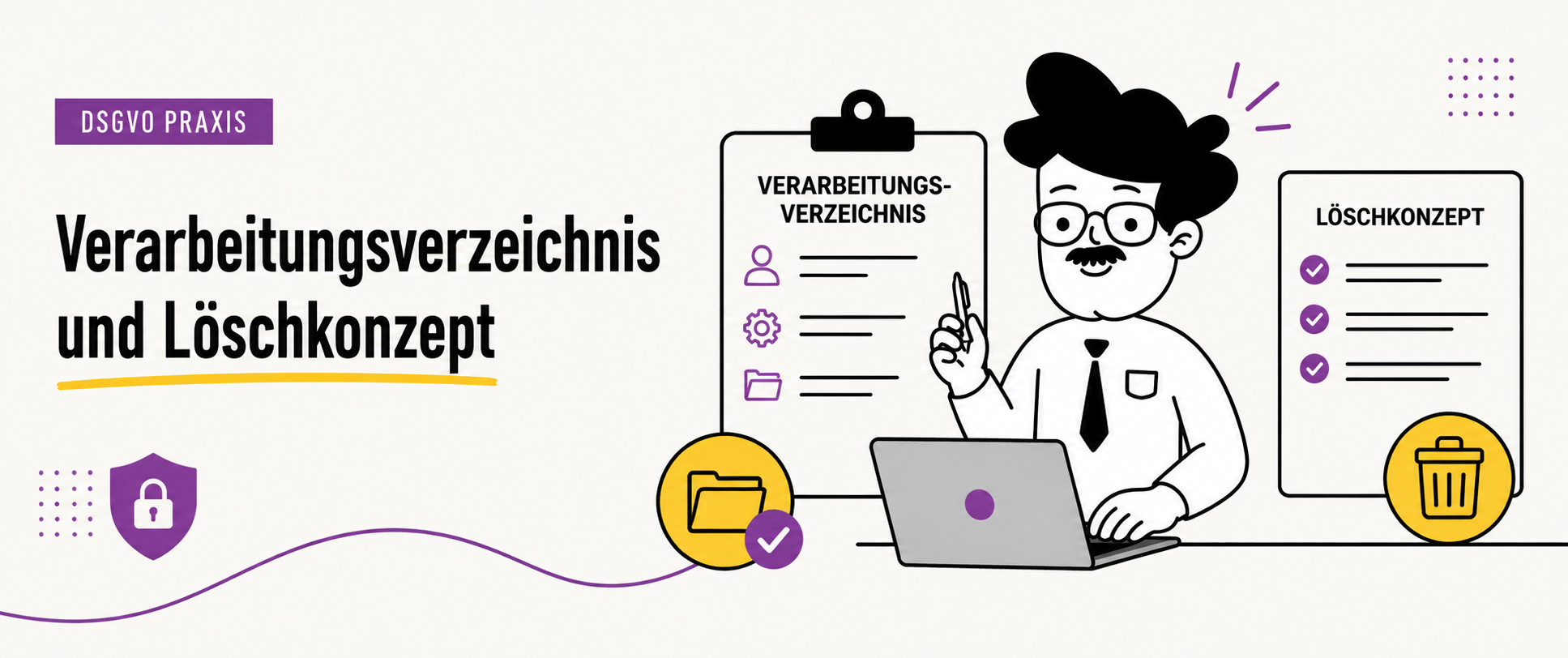
Table of contents
Context: Why ROPA and a deletion concept matter
Effective implementation of the record of processing activities (ROPA) and a data deletion concept is of central importance in the context of the GDPR.
A properly maintained ROPA creates transparency in data processing processes. A deletion concept supports storage limitation and compliant data erasure.
What is the record of processing activities (ROPA)?
The record of processing activities documents in detail all processing activities involving personal data in a business.
Typical contents: which data is processed, for what purpose, how/where, and by whom.
It also serves as evidence of compliance and can be requested by supervisory authorities.
What is a data deletion concept?
A data deletion concept ensures that personal data is not stored longer than necessary.
It is based on the principles of data minimisation and storage limitation and defines processes and deletion periods.
Integrating ROPA and deletion concept
ROPA and deletion concept should be closely linked: the ROPA provides an overview of processing; the deletion concept defines when data must be deleted.
Important steps: align data categories and deletion periods, automate deletion processes, and maintain documentation and evidence.
Implementation challenges
Challenges include complex data landscapes, dynamic changes in processes, and legal uncertainty when setting deletion periods.
Best practices
Best practices: regular audits, staff training, use of specialist software, and legal advice when uncertain.
Conclusion
A carefully maintained ROPA and a well-founded deletion concept are indispensable tools for compliance and building trust.
Businesses should update both regularly and adapt them to new processes and requirements.
Author

Sebastian Schenk
Co-Founder & CEO
Lawyer and data protection officer. Drives product vision at simply Legal and ensures Dieter is sound legally and in practice.
This article reflects the position at the date of publication. We update our content when the law changes.
Related articles
Thursday, 10 July 2025
How to create a privacy policy
Every website needs a privacy policy. It fulfils the information obligations under Art. 13 GDPR and explains which data is processed for what purpose and on what legal basis.
Thursday, 11 September 2025
Technical and organisational measures
Technical and organisational measures (TOMs) are the backbone of data protection under the GDPR. They range from technical security safeguards to organisational processes and should be reviewed and adjusted regularly.
Thursday, 23 October 2025
6 answers on the data processing agreement (DPA)
A data processing agreement (DPA) is required under the GDPR as soon as an external service provider processes personal data on your behalf. It defines responsibilities and protects against fines and loss of trust.